
Abstract
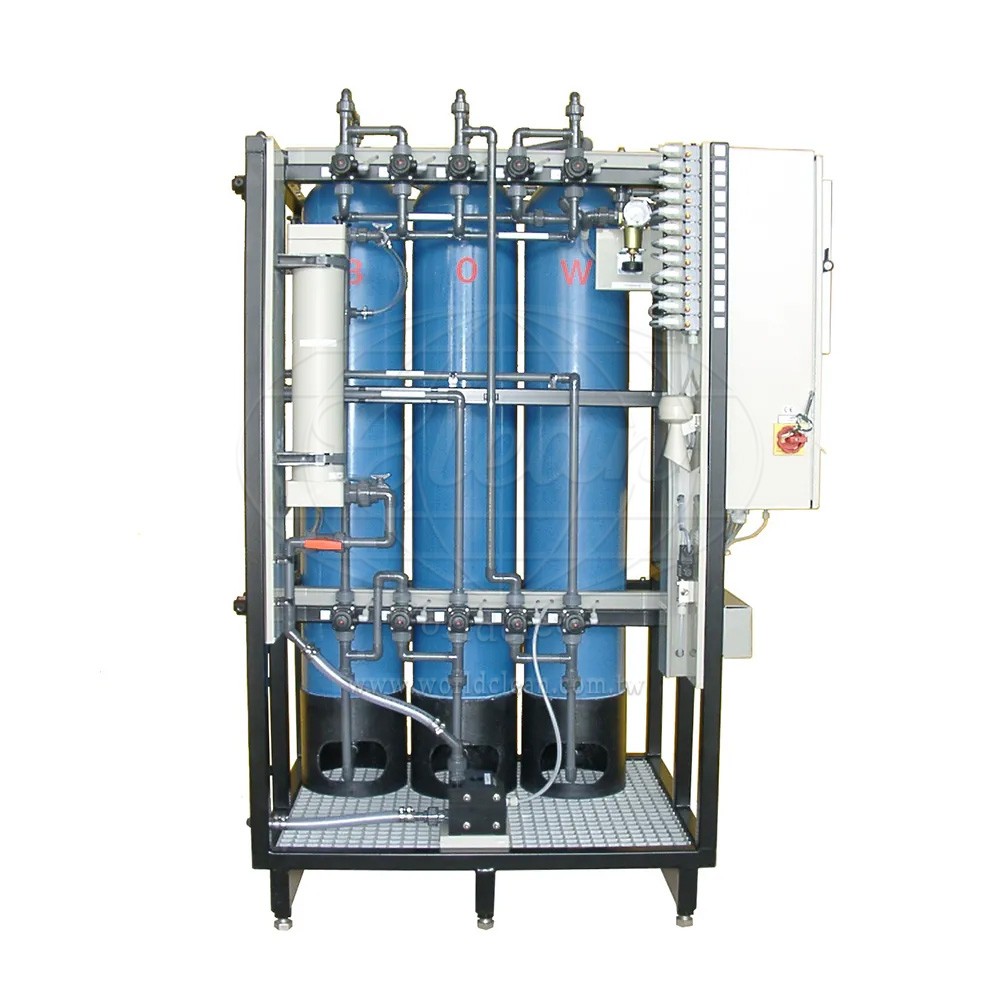
The Equipment addresses the present challenges of waste solutions treatment in aluminum alloy anodizing plants. During continuous production, sulfuric acid (H₂SO₄) can be replenished as it is consumed, but aluminum ions (AL3+) continue to accumulate, with no effective filtration method available to remove them. When the concentration of aluminum ions exceeds the acceptable range, the solution becomes waste solution. To lower the aluminum ion concentration, a portion of this waste solution is discharged to wastewater treatment facilities, leading to increased costs for alkaline solutions and a higher volume of wastewater discharge.
Definition of Waste Solution
In aluminum anodizing, the tank solution refers to the solution used during the anodizing process of aluminum alloys. Initially, the concentration of H₂SO₄ in the anodizing solution ranges between 150-200g/l. Without aluminum ions, this solution effectively dissolves the oxide film. During a 30-minute anodizing process, approximately 3.84 kg of aluminum is dissolved per ton of material (400m²/T), depending on the film thickness. However, as the concentration of dissolved aluminum increases, the presence of AL3+ ions hinders the movement of hydrogen ions (H⁺) and sulfate ions (SO₄²⁻) to the cathode and anode, respectively, thereby reducing the conductivity of the solution. When the aluminum ion concentration exceeds 20g/l, the resistance becomes too high, and the solution is considered as waste solution.
Example: When the AL3+ concentration in an anodizing tank reaches 20g/l and needs to be reduced to 10g/l, the solution is considered as waste solution. Consequently, half of the anodizing tank’s solution must be discharged, with larger tanks requiring even more discharge. This periodic discharge increases the burden on wastewater treatment facilities, requiring significant amounts of alkaline solution for neutralization, which in turn raises costs. Additionally, the solution level in the anodizing tank drops, which leads to production halts for sulfuric acid replenishment and solution cooling down with a chiller. If production controls AL3+ concentration between 10g/l and 20g/l before discharge, it results in inconsistent oxide film pores. Such inconsistency requires frequent increases in the rectifier output, which raises exhaust emissions and changes the barrier layer, leading to color differences problems in the final product.
Issues During Production
When AL3+ concentration in the tank solution is too high, it causes increased resistance and decreased conductivity, causing several production issues:
- Increased Electrolysis Time:
Rectifier operates at the originally set voltage (constant voltage mode, C/V). During production, it turns out insufficient film thickness, reduced current and lower current density. To achieve the desired film thickness, the electrolysis time must be extended. - Increased resistance and decreased conductivity require raising the rectifier voltage to maintain the original current density. Higher current leads to higher power consumption, which in turn causes faster temperature rises in the tank. Prolonged operation of the chiller to manage this temperature increase results in higher energy usage. Poor cooling system design can cause significant temperature fluctuations of the tank solution, increasing sulfuric acid consumption and requiring more frequent acid additions, which further raises exhaust emissions.
Surface Issues of Final Materials:
- For Silver-white materials: Darker color.
- For Dyed materials: Uneven color and a darker appearance over the same time.
- For Electrolytic colouring materials: Color differences.
Composition of Anodizing Solution
The composition of the anodizing solution—including the concentration ranges of AL3+ (g/l) and H₂SO₄ (g/l), the operating temperature of the tank solution, and current density (A/dm²)—varies based on the type of aluminum alloy and the specific surface requirements. Refer to Curve Graphs illustrations.
Given the significant impact of aluminum ion concentration on both the quality of the oxide film and energy consumption, aluminum anodizing companies generally use the following two methods to control aluminum ion concentration:
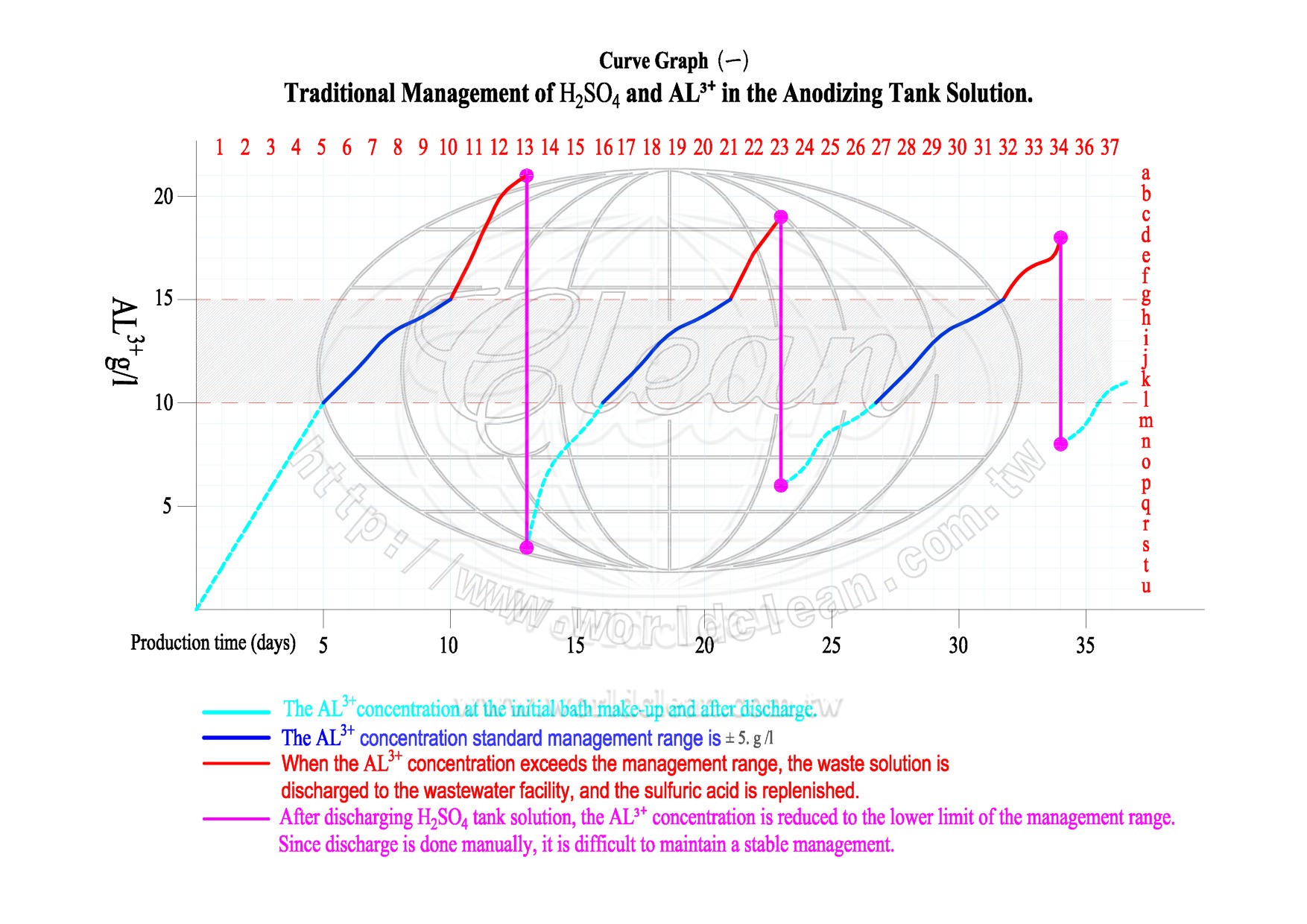
- Traditional Treatment of Anodizing Tank Waste Solution:
(Refer to Curve Graph 1)
Method: Discharge a portion of the tank solution to the wastewater treatment facilities (tank dumping) to reduce the AL3+ concentration.
Challenges:
- Discharging the tank solution lowers the solution level in the anodizing tank, so it is necessary to replenish with sulfuric acid. During replenishing, when sulfuric acid molecule combines with water molecule, it forms a series of stable hydrate and at the same time releases a significant amount of heat so the production could not be continued as enhanced cooling circulation is required. This results in wasted idle time and increased chiller power consumption, thereby driving up operational costs.
- Every time large-scale discharge of tank solution raises expenses for sulfuric acid and the demand for alkali to neutralize the wastewater pH before discharge. Additionally, the reduced solution level forces production to halt until the tank is refilled.
- Controlling AL3+ concentration through frequent large-scale discharges of H₂SO₄ solution causes significant environmental issues. It also requires frequent adjustments in current density and extended electrolysis times, leading to increased rectifier power consumption..
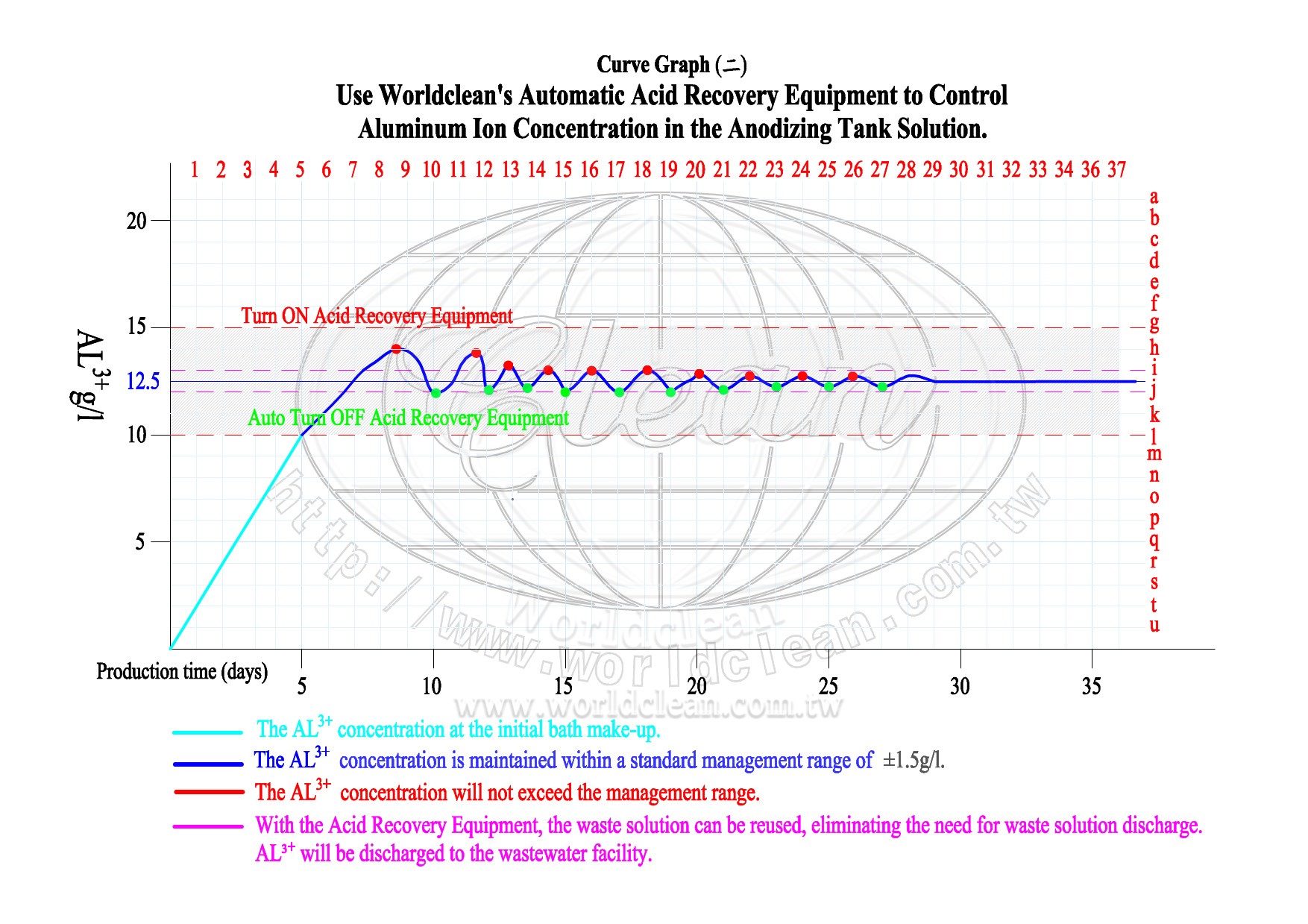
- Using Worldclean’s Acid Recovery and Aluminum Ion Stabilization Equipment:
(Refer to Curve Graph 2)
Method: Use Worldclean’s Acid Recovery Equipment to manage and control aluminum ion concentration.
Advantages:
- Continuous Production: When AL3+ concentration rises, there is no need to discharge waste solution. Simply turn on the Acid Recovery Equipment, which filters and purifies the solution, enabling nearly 100% reuse. This enables uninterrupted production in the anodizing tank, while rectifier and cooling equipment maintain normal power consumption.
- Reduced Waste and Costs: The Equipment recycles waste acid and directs AL3+ to the wastewater facilities without large-scale acid discharge. This reduces the burden on wastewater treatment facilities, lowers alkaline solution consumption, and achieves waste reduction.
- Operational Efficiency: The Equipment can operate in either automatic or manual mode, with batch operations requiring no manual intervention. It maintains AL3+ concentration range within ±1g/l, saving labor costs and ensuring accurate current density operation.